Thursday, 21 April 2011

Critique of Perennialism

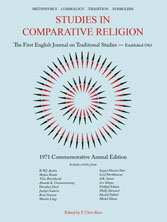
Earlier I wrote about the “Perennialist” school or movement. Its manifesto could be said to be Frithjof Schuon’s The Transcendental Unity of Religions, which was praised in glowing terms by T.S. Eliot, among others. According to Schuon, if I may paraphrase, each world religion is like a path up the same mountain. Follow any one path to the end, and you will arrive at the identical summit – but woe betide anyone who tries to scramble sideways off one path to join another, or gets the paths mixed up. Such eclecticism may well end in disaster, as the climber tumbles into the abyss. 

What does this do to the Christian claim that “there is no other name by which we may be saved”? And what do we make of the clear contradictions between the religious teachings of different religions? How can they all be true at the same time? Schuon accounts for this by distinguishing “absolute” from “relatively absolute” truth, and by relegating certain teachings to the “human margin” of religion. It is the esoteric, metaphysical core that is ever the same, but there is room for great variation within theological systems and devotional practices. Furthermore, he says, each great tradition has a perfectly valid claim to be unique and central, superior to all others. Indeed, for the human collectivity to which it is addressed, it is central and indispensable. Just as each man in a crowd may legitimately call himself “I”, and cannot but view himself in some way as situated at the centre of the world, so in each religion the Absolute says “I” and demands unqualified adherence. That adherence keeps us on the path to the summit. 

In The Lord of History Jean Daniélou wrote of Schuon’s predecessor Guénon that he “compels attention by concerning himself with things that are really interesting in themselves, and by his bold denunciation of fallacies that seem to us, as they seemed to him, to be ultimately responsible for the decadence of the modern world. But his constructive system proves, upon examination, to be fundamentally incompatible with Christianity; for he has eliminated the very substance of our religion, in denying the privileged status, the absolute factual unicity of the event of Christ’s resurrection.” The “fundamental flaw” in Guénon’s work, Daniélou says, is “the inversion of the relationship between metaphysics and revelation”. For Schuon similarly, while theology (based on revelation) transcends mere philosophy, metaphysics (based on intellectual intuition) must transcend theology. He says in The Transcendent Unity of Religions: “intellectual intuition is a direct and active participation in divine knowledge and not an indirect and passive participation, as is faith. In other words, in the case of intellectual intuition [gnosis], knowledge is not possessed by the individual insofar as he is an individual, but insofar as in his innermost essence he is not distinct from his Divine Principle”. 

Perennialist metaphysics rests on the self-evidence of the One as its first principle. And thus, for the orthodox Christian, one of Schuon’s least impressive books is Logic and Transcendence, where he struggles to make out that the Christian Trinity is merely an upaya – a provisional or skillful means in the Buddhist sense, more or less effective as an aid to devotion but not absolutely “true”. He treats the Persons as aspects of the divine Unity. “Whatever may be the necessity or the expediency of the Trinitarian theology, from the standpoint of pure metaphysic it appears to confer the quality of absoluteness on relativities.” “Only Unity as such can be a definition of the Absolute.” So “to assert, as one has heard it done, that the Trinitarian relationships belong, not to this relative absoluteness, but to the pure and intrinsic Absolute, or to the absoluteness of the Essence, amounts to asking us to accept that two and two make five or that an effect has no cause, which no religious message can do and the Christian message has certainly never done.” 

On the contrary, a Christian who is faithful to tradition may wish to argue, this “absoluteness of relativity” is precisely what we are asked to accept. Its other name is love. In future posts I intend to argue for this position against Schuon and the Perennialists, but in the meantime you may be interested in a discussion of the question of whether Guénon and Schuon were biased against love at the Sophia Perennis site? I also recommend the writings of Jean Borella, a Perennialist turned orthodox Catholic, especially (in this context) his book on Guénonian Esoterism and Christian Mystery, which is also relevant to Schuon. My own thoughts on all this, on which the present post is partly based, are developed in an article called "The Deep Horizon" which is available on the Second Spring site but also here.

Friday, 15 April 2011

The Name of God

“[W]e have to be clear about what a name actually is,” writes Pope Benedict XVI. “We could put it very simply by saying that the name creates the possibility of address or invocation. It establishes relationship." The most archetypal act of naming is God’s naming of himself. 

In the encounter with Moses at the burning bush, God names himself “I am”. He tells the reluctant prophet, “Say this to the sons of Israel, ‘I AM has sent me to you’” (Exodus 3:15). God’s name is himself. It is so sacred that the Jews only allowed the High Priest to pronounce it once a year in the Holy of Holies. When God says "I" it is the act of Being, the primordial act of language, the principial Word. Thus it is not we who name him, but God who names himself, or rather who gives us sacramental tokens to use as names – tokens of his presence. In particular he names himself "Jesus". The many other names by which human beings try to identify an object for worship, such as “the Just” or “the Merciful”, and even “the Creator”, describe aspects of him only, paths of approach, angles of sight; like colours in a rainbow compared to the white light of the sun.

The Name creates the possibility of invocation, and the invocation of God under a variety of names is one of the fundamental methods of prayer. We associate the "Jesus Prayer" - the constant repetition of the phrase Lord Jesus Christ have mercy on me a sinner - with the Orthodox East, but repetitive invocation is important in the West too (and use of the Jesus Prayer itself is increasingly common among Catholics). Even the Rosary, though a more elaborate formula, is based around the repetition of the divine Name "Jesus" at the heart of each Hail Mary: "...Blessed art thou, and blessed is the fruit of thy womb Jesus...". The other words around these are just a setting, like a monstrance, to lead us to Christ at the centre. Many saints recommend the use of short prayers that can easily be coordinated with breathing in and out.

Prayers may be endlessly repeated not in order to be "mechanical", but to fulfil the teaching of Scripture that we should endeavour to "pray constantly" (Luke 18:1 and 1 Thess. 5:17). The aim is to lead our constantly changing thoughts and feelings into a single conduit. Normally our minds are in a state of distraction, and this often takes the form of an interior monologue, a stream of consciousness like that portrayed in Joyce's novel Ulysses. The repeated prayer, especially if it contains the Holy Name, absorbs and quietens this babbling stream, smoothing the water as it it flows straight to God.
Illustration: Names of God by Athanasius Kircher

Thursday, 14 April 2011

Who or what is God?

Terry Pratchett is one of Britain’s favourite authors. His “Diskworld” and other fantasy novels have sold more than 60 million copies. He once said he was "rather angry with God for not existing". But later in life he qualified this statement slightly: "It is just possible that once you have got past all the gods that we have created with big beards and many human traits, just beyond all that, on the other side of physics, they [the gods] just may be the ordered structure from which everything flows. That is both a kind of philosophy and totally useless - it doesn't take you anywhere. But it fills a hole."

The "other side of physics"? Exactly. But it does take us somewhere, and the desire not to go in that direction is partly what lies behind the opposition of the New Atheists to Christianity. There is an emotional, perhaps a spiritual component, in the denial of God. But whatever the motivation, it involves a complete misunderstanding of what we mean by God, which is fundamentally a metaphysical idea. Without understanding that concept of God, and why it is necessary, you won’t be able to recognize the possibility of a revelation. Although a revelation can bring with it at the same time a sense, previously missing, of the metaphysical.

So what do we (believers) mean by “God”? I have tried to answer that question step by step in a “Conversation with a Skeptic”, the skeptic in this case being a scientific atheist. (This piece can be accessed along with a further article called "God on a T-Shirt" in the Christianity section of the main web-site.) As I say in the “Conversation”, if he exists, God is the infinite source of being, of existence, of everything that is good in the world. That means he is nothing less than the Holy Grail, the object of everyone’s ultimate desire, the secret of happiness and immortality, the very meaning of life and love. How can you not regard this as the most important question there is? No wonder that, all through history, people have built their civilizations around the search for this God, or the attempt to connect with him.

I hope these articles are helpful to someone. I have no evidence that any atheists have read them yet. Perhaps that is the real problem – actually getting a conversation going.

Illustration: Bust of Zeus in the British Museum.

Saturday, 9 April 2011

Metaphysics of Titus Burckhardt

One of the most lucid introductions to the Perennialist metaphysics mentioned in the previous post can be found in An Introduction to Sufi Doctrine, by the late Titus Burckhardt. Here we find a doctrine of the degrees of reality very akin to that of the Neoplatonists, for whom the world of the Many exists in dependent relation to the One or the Good. The eide or logoi which are the archetypal forms of everything in the world have no reality apart from God, and the world has no reality apart from the eide in which they participate. As mental forms they are mere abstractions. But as “possibilities” inherent in the Intellect and (principially) in the divine nature, they constitute the meaning and content of reality, which without them would fall back into nothingness.

Inseparable from the ontology outlined in Burckhardt’s book is an epistemology and an anthropology – that is, a doctrine of knowledge (of how we know things and what we can know) and of man (what we are and what we can become). The doctrine of the degrees of reality, in both macrocosm and microcosm, leads Perennialists to reject any “dualistic” anthropology that might deprive the human subject of access to archetypal reality. The human subject, they insist, is tripartite not dual; not just body and soul, it consists of body, soul, and spirit, corresponding to the three main levels of reality. The faculty by which we know the divine Ideas, variously called Nous, Intellectus, or Buddhi, constitutes a ray of the divine Sun in the heart of man. It knows the logoi by “connaturality”; that is, by intuition. At the level of the soul, these intuitions are clothed in symbols by the imagination, which mediates between the intellect (supplier of the “form”) and the bodily senses (which provide the “matter”) for human cognition.

Though these ideas are today more closely associated with writers on Islamic than on Christian philosophy, it would not be hard to relate them (as Perennialists often do) to Scholastic thought in the West, which has survived in fragmentary fashion right up to the present time within the Catholic Church. The Christian Scholastics were well aware of the great Neoplatonic and Islamic philosophers, to whom in many cases they owed their knowledge of the texts of Classical philosophy, and they spent a great deal of time refuting or reworking their ideas in the light of the Christian revelation. Nevertheless, though the Christian, “Pagan”, Islamic, and Jewish thinkers of the Middle Ages were in many respects opposed, they were very much closer to each other than they were to the Nominalists of the fourteenth or the Rationalists of the seventeenth centuries. Modernity marks a definite break from the thought-world of the Middle Ages. More on that another time.

Tuesday, 5 April 2011

Perennial Philosophy?

The term is used by Catholics to refer to the thought of St Thomas Aquinas, but in 1945 Aldous Huxley published an influential book of this title, where it functioned as a translation of the Hindu term Sanatana Dharma (eternal religion); that is, an “immemorial and universal” metaphysical and ethical teaching, found in all the great religions and particularly in their mystical traditions. It is in this sense that the term has been adopted by a group influential scholars and writers known as “Perennialists”. Hindu scholar Ananda Coomaraswamy, who worked as Research Fellow at the Boston Museum of Fine Arts in the 1930s and 40s, was one of the three founders, along with the Frenchman René Guénon and the Swiss-born Frithjof Schuon (both converts to Islamic Sufism, the one from a Catholic the other a Lutheran background).

Perennialism crosses religious boundaries but (or so it claims) without undermining them. It insists that truth can only be attained through the sincere practice of one or other living religious tradition. Such mediating forms can be transcended only from within: each revealed religion remains unique and precious in all its details, and must be accepted and practiced as the condition for any authentic spiritual realization. This teaching has played an important part in persuading many people (including myself) to take seriously the need for conversion, and to search for an authentic spiritual home. They have also awakened an interest in metaphysics and symbolism. Future posts will discuss these positive aspects, and also voice some criticisms. Sophia Perennis is one of the main publishers of this literature.