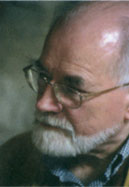
Earlier I wrote about the “Perennialist” school or movement. Its manifesto could be said to be Frithjof Schuon’s The Transcendental Unity of Religions, which was praised in glowing terms by T.S. Eliot, among others. According to Schuon, if I may paraphrase, each world religion is like a path up the same mountain. Follow any one path to the end, and you will arrive at the identical summit – but woe betide anyone who tries to scramble sideways off one path to join another, or gets the paths mixed up. Such eclecticism may well end in disaster, as the climber tumbles into the abyss.
What does this do to the Christian claim that “there is no other name by which we may be saved”? And what do we make of the clear contradictions between the religious teachings of different religions? How can they all be true at the same time? Schuon accounts for this by distinguishing “absolute” from “relatively absolute” truth, and by relegating certain teachings to the “human margin” of religion. It is the esoteric, metaphysical core that is ever the same, but there is room for great variation within theological systems and devotional practices. Furthermore, he says, each great tradition has a perfectly valid claim to be unique and central, superior to all others. Indeed, for the human collectivity to which it is addressed, it is central and indispensable. Just as each man in a crowd may legitimately call himself “I”, and cannot but view himself in some way as situated at the centre of the world, so in each religion the Absolute says “I” and demands unqualified adherence. That adherence keeps us on the path to the summit.
In The Lord of History Jean Daniélou wrote of Schuon’s predecessor Guénon that he “compels attention by concerning himself with things that are really interesting in themselves, and by his bold denunciation of fallacies that seem to us, as they seemed to him, to be ultimately responsible for the decadence of the modern world. But his constructive system proves, upon examination, to be fundamentally incompatible with Christianity; for he has eliminated the very substance of our religion, in denying the privileged status, the absolute factual unicity of the event of Christ’s resurrection.” The “fundamental flaw” in Guénon’s work, Daniélou says, is “the inversion of the relationship between metaphysics and revelation”. For Schuon similarly, while theology (based on revelation) transcends mere philosophy, metaphysics (based on intellectual intuition) must transcend theology. He says in The Transcendent Unity of Religions: “intellectual intuition is a direct and active participation in divine knowledge and not an indirect and passive participation, as is faith. In other words, in the case of intellectual intuition [gnosis], knowledge is not possessed by the individual insofar as he is an individual, but insofar as in his innermost essence he is not distinct from his Divine Principle”.
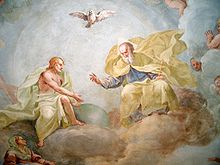
Perennialist metaphysics rests on the self-evidence of the One as its first principle. And thus, for the orthodox Christian, one of Schuon’s least impressive books is Logic and Transcendence, where he struggles to make out that the Christian Trinity is merely an upaya – a provisional or skillful means in the Buddhist sense, more or less effective as an aid to devotion but not absolutely “true”. He treats the Persons as aspects of the divine Unity. “Whatever may be the necessity or the expediency of the Trinitarian theology, from the standpoint of pure metaphysic it appears to confer the quality of absoluteness on relativities.” “Only Unity as such can be a definition of the Absolute.” So “to assert, as one has heard it done, that the Trinitarian relationships belong, not to this relative absoluteness, but to the pure and intrinsic Absolute, or to the absoluteness of the Essence, amounts to asking us to accept that two and two make five or that an effect has no cause, which no religious message can do and the Christian message has certainly never done.”
On the contrary, a Christian who is faithful to tradition may wish to argue, this “absoluteness of relativity” is precisely what we are asked to accept. Its other name is love. In future posts I intend to argue for this position against Schuon and the Perennialists, but in the meantime you may be interested in a discussion of the question of
whether Guénon and Schuon were biased against love at the Sophia Perennis site? I also recommend the writings of Jean Borella, a Perennialist turned orthodox Catholic, especially (in this context) his book on
Guénonian Esoterism and Christian Mystery, which is also relevant to Schuon. My own thoughts on all this, on which the present post is partly based, are developed in an article called "The Deep Horizon" which is available on the Second Spring site but also
here.